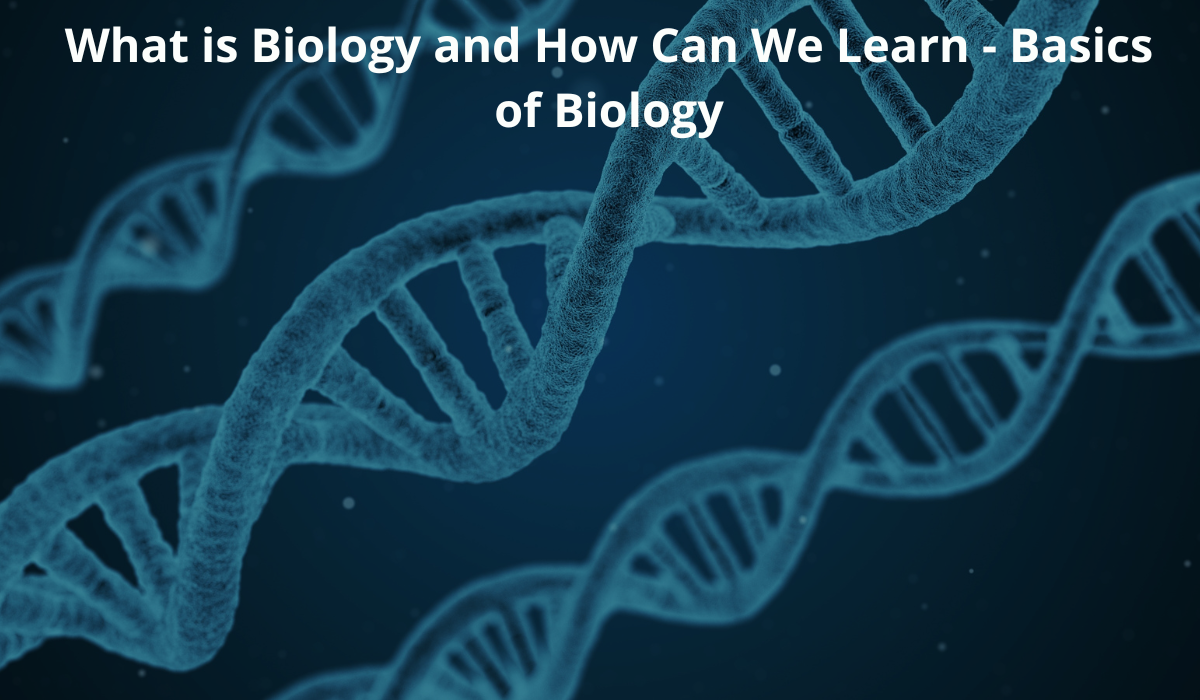
What is Biology and How Can We Learn – Basics of Biology
Biology is the study of life and its origins. It covers everything from the molecular level to the evolutionary history of species. In this article, we will discuss some basics of biology and how you can learn it.
Basics of Biology
What is Biology?
Biology is the study of the structure and function of living organisms. It covers everything from how cells work to the molecular workings of proteins and DNA. Biology can be studied in a variety of ways, including through experiments, through reading scientific papers, or even watching videos about biology.
How Can We Learn – Basics of Biology?
If you’re interested in learning more about biology, there are a few things you can do to get started. First, you can read scientific papers to learn about the latest findings in the field. Second, you can watch videos about different aspects of biology on websites like YouTube. Finally, you can experiment with different types of organisms in your classroom or at home. By doing these things, you’ll learn everything there is to know about basics of biology!
Cell
Cellular biology is the study of the structure, function, and behavior of cells. This includes the research on the cell’s nucleus, cytoplasm, organelles, proteins, and DNA. Cellular biology is used to understand disease and how to treat it.
Cell biology is the study of the cell and its components, how they interact with each other, and how this affects the function of the cell as a whole. In essence, it is the study of how cells work. This includes everything from the structure and function of the cell’s outer membrane, to the way that proteins are manufactured and delivered to their destination.
Basic concepts in cell biology include:
1. The Cell Cycle – The cell cycle is a series of phases in which a cell undergoes changes that allow it to grow and divide.
2. Genetics – Genetics is the study of the genes that control our physical characteristics and our behaviors.
3. Proteins – Proteins are important molecules that play many roles in cells. They are responsible for carrying out cellular tasks, such as building structures or carrying out chemical reactions.
Evolution
Biology is the study of the nature and behavior of living organisms, including their growth, development, reproduction, and interactions with each other and their environment. In order to learn about biology, you need to first understand some basics about evolution. Evolution is the process by which organisms change over time. Over time, different populations of organisms can accumulate genetic differences that make them unique from one another. These differences may eventually lead to the emergence of new species.
Genetics
Genetics is the study of heredity, the transmission of character and traits from parents to their children.
The process of heredity is composed of three steps: segregation, recombination, and mutation. Segregation is the separation of alleles (variants) within a population. Recombination is the mixing of two different alleles together to create new alleles. Mutations are changes in the DNA sequence that can occur as a result of recombination or mutation.
Ecology
Biology is the study of life and the nature of living organisms. It encompasses their structure, function, evolution, distribution, and interactions with each other and their environment. Biology students learn about the genetic code, cell biology, plant physiology, animal physiology, ecology, and biodiversity. They also learn how to use laboratory tools to conduct experiments and analyze data.
Physiology
Basic Biology: Physiology is the study of how the body works and how it affects our daily lives. In this course, we will explore the basics of physiology, including how the body maintains homeostasis, how muscles work, and how the nervous system controls our body’s functions. We will also learn about diseases and their causes, as well as treatments for them. This course is perfect for anyone who wants to learn more about their own body and how it works.
What is physiology?
Physiology is the study of how the body functions and how it responds to the environment. This includes understanding the structure and function of cells, tissues, organs, and whole bodies. Physiology also includes how drugs and other treatments effect these systems.
Anatomy
Biology is the study of the structure and function of living organisms, their cells, tissues and organs. It covers everything from the molecular and cellular level up to the organization of whole organisms. Biological studies can be used to help us understand a wide range of health-related topics, from cancer to heart disease.
To get started in biology, you first need to understand some basic terms. At the molecular and cellular level, living things are made up of tiny pieces called molecules. These molecules interact with each other to create structures (such as cells), carry out functions (such as making proteins) and produce energy (in the form of ATP).
At the organ level, biological structures are composed of many smaller units called cells. Cells contain DNA (the genetic code that tells them how to look and behave), proteins (which do the work) and other molecules (like lipids). Cells also contain organelles (such as mitochondria), which provide them with energy.
In addition to cells, tissues make up an organism’s body structure. Tissues are made up of many different types of cells working together like a puzzle. Each tissue has a specific role in your body, from muscles to skin.
Finally
Homeostasis
What is biology and how can we learn – Basics of Biology
Biology is the study of life, its origins and how it works. In this article, we will discuss some basics of biology that you should know if you want to learn more about this fascinating subject.
Biology is the study of how living things interact with their environment. This includes everything from understanding how cells function to understanding how diseases develop.
One of the most important aspects of biology is homeostasis. This is the ability of an organism to maintain a stable internal environment despite changes in its surroundings. For example, your body maintains a consistent temperature by regulating your metabolism and muscle activity.
Cell biology
Cell biology is the study of the structure and function of cells. Cells are the basic unit of life and can be found in all organisms from simple single-celled organisms to complex animals and plants. Cells carry out their functions by exchanging information with each other through the process of communication called communication. This communication allows cells to carry out their specific tasks in an organism.
Cell biology is divided into two main branches: mitochondrial and nuclear. Mitochondria are organelles inside cells that produce energy for the cell by breaking down food molecules. The DNA in a cell’s nucleus is responsible for the genetic information for the cell. Nuclear DNA is organized into chromosomes that contain genes responsible for the cell’s functions. Chromosomes are divided into small pieces called nuclei, which are located inside cells.
The study of cell biology is important because it helps us to understand how cells work and how diseases can be caused by problems with cell function. Cell biologists also use cell biology research to create new treatments for diseases.
Adaptation
adaptation is a change in the phenotype or gene expression of an organism as a result of environmental stress or challenge. An organism’s response to environmental stressors can be divided into two broad categories: primary and secondary adaptations. Primary adaptations are those that occur when an organism is first exposed to the new environment and need to take into account such things as temperature, hydration, oxygen availability, etc. Secondary adaptations are modifications that an organism makes to its physiological or reproductive apparatus in order to better cope with the new environment.